
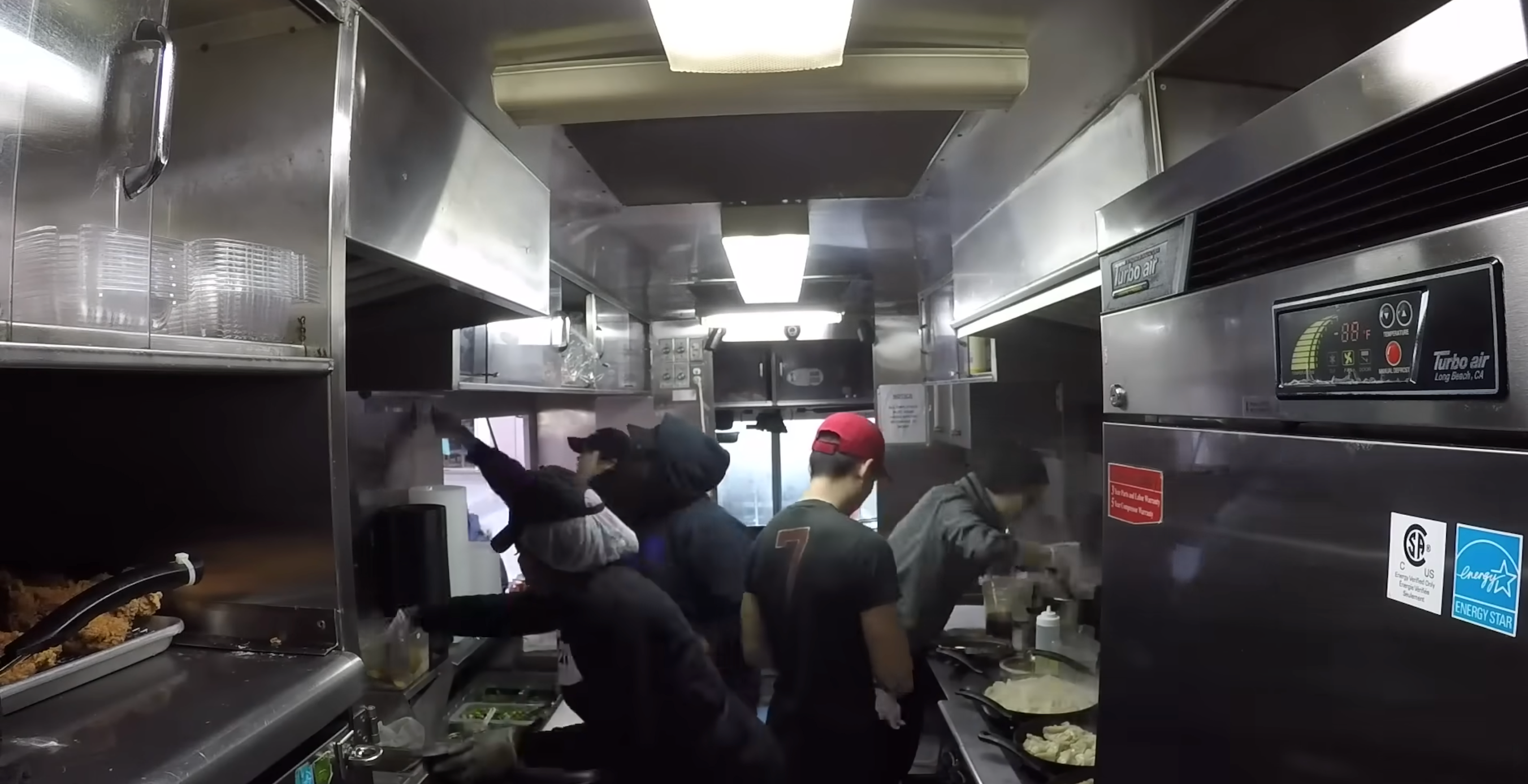

The idea for MobiFeast came from a college town, where food trucks were everywhere. Most were family-run businesses, with owners working long hours and sometimes even their kids helping out. Their food was popular and lines were long, but they could only operate for short windows each day. Despite strong demand, almost none of them ever expanded beyond a single truck.
And they weren’t able to serve customers when they needed them most. When the trucks closed for the night, the only late-night option was a convenience store. The demand for good food was clearly there but the operating model couldn’t support longer hours or growth.
Over the past decade, rising labor costs and shrinking restaurant margins have made scaling food businesses increasingly difficult. As the pressures intensify, automation in food service is inevitable. Food trucks remain a phenomenal part of U.S. food culture and one of the most profitable formats in the industry, yet they are also constrained by human-intensive operations. Robotics in mobile food service is just a matter of time.
MobiFeast was founded to rethink this model from the ground up - combining robotics, AI, and mobility to give food businesses a new operating model that scales profitably, while delivering consistent, high-quality food to customers wherever they are.
.svg)